
Product Center
Service hotline
+86-13035117088Current page: Home > ApplicationApplication
Applications of Epoxy Oligom
Overview
Silane oligomers are synthesized from structurally defined silane coupling agents, combined with specific end-capping agents, catalysts, and stabilizers, yielding oligomers with a degree of polymerization of 3–5. Compared to conventional silane coupling agents, they feature longer molecular chains, improved chain flexibility, better system stability, and offer enhanced adhesion, boiling water resistance, chemical resistance, abrasion resistance, heat and weather resistance, as well as unique flexibility.
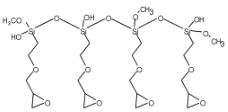
Epoxy-based silane oligomers are produced by hydrolyzing γ-(2,3-epoxypropoxy)propyltrialkoxysilane (e.g., KH560) under controlled conditions. They contain multiple reactive groups such as alkoxy and epoxy groups. The figure below shows the structure of KH560 oligomer.
Epoxy-based silane oligomers can enhance the adhesion and bonding strength between most common emulsions (e.g., waterborne epoxy, waterborne acrylic, waterborne polyurethane) and inorganic substrates such as metal, glass, ceramic, and concrete. Due to their high reactivity, they form strong covalent bonds with both the emulsion and the inorganic substrate, resulting in strong adhesion that is difficult to break. Under acidic conditions (approx. pH 4), the adhesion improvement is more pronounced. They are stable in water and maintain performance after long-term storage.
Applications
2.1 Metal Surface Treatment
Wuhan Disai New Materials Co., Ltd. patented A method for preparing silane oligomer aqueous solution for metal protection. The method involves mixing hydrolyzed epoxy silane and amino silane solutions, followed by ring-opening polymerization at 50–90°C for 0.5–2 h to obtain a silane oligomer aqueous solution. After coating on metal surfaces and drying, the resulting passivation film exhibits good corrosion resistance and high-temperature yellowing resistance.
2.2 Waterborne Coatings
Nanjing Changjiang Paint Co., Ltd. patented A long-lasting waterborne phenolic epoxy conductive antistatic coating and its preparation method. The formulation includes Momentive CoatOSil MP200 (an epoxy-based silane oligomer), which forms strong covalent bonds with waterborne organic resins, inorganic pigments/fillers, and substrates, improving adhesion.
Shanghai Huayi Fine Chemical Co., Ltd. patented An aviation fluid-resistant waterborne coating and its preparation method and application. The formulation includes Momentive CoatOSil MP200, which forms Si–O–Si networks through siloxane condensation, increasing crosslinking density, improving resistance to phosphate ester hydraulic fluids, and enhancing adhesion, water resistance, impact resistance, and salt spray resistance.
Shandong Bengteng Paint Co., Ltd. patented A thick-applied waterborne epoxy coating for storage tanks and its preparation method and application. The formulation includes Momentive CoatOSil MP200. By optimizing component ratios and preparation processes, the coating exhibits excellent physical properties, chemical resistance, water/acid/alkali resistance, good anticorrosion performance, stable conductivity, and excellent buildability, improving construction efficiency.
Suzhou Jiaweixin New Materials Co., Ltd. patented A preparation method for waterborne epoxy-modified silicone high-temperature anti-corrosion coatings, where alkoxysilane oligomers are added to prepare a waterborne epoxy-modified silicone emulsion.
Product Introduction
Wuhan Hugarise New Material Co., Ltd. offers an epoxy-based silane oligomer (PCU-K11), comparable to imported products such as Momentive CoatOSil MP200, Evonik Dynasylan® HYDROSIL 2926, and Shin-Etsu KR-516.

Application of Amino Silane
1 Overview
Silane oligomers are synthesized from specific silane coupling agents as the base material, combined with selected end-capping agents, catalysts, and stabilizers, resulting in a polymerization degree of 3–5. Compared to conventional silane coupling agents, they feature longer molecular chains, enhanced chain flexibility, improved system stability, and offer superior adhesion, boiling water resistance, chemical resistance, abrasion resistance, heat resistance, weatherability, and unique flexibility.
Amino silane oligomers are low-molecular-weight polymers formed by controlled hydrolysis and condensation of amino silane monomers. They combine the reactivity of organic amine groups with the excellent properties of the siloxane backbone. Compared to traditional silane monomers, they provide more uniform film formation, higher storage stability, and improved functionality, acting as a “molecular bridge” between organic systems and inorganic substrates. They hold irreplaceable value in various industrial fields such as metal surface treatment, baking paints, and waterborne coatings.
2 Applications
2.1 Metal Surface Treatment
Metal surfaces are prone to oxidation and corrosion in humid environments and exhibit weak interfacial adhesion with organic coatings and adhesives. Amino silane oligomers form a dense protective film on metal surfaces through chemical interaction while enhancing interfacial compatibility. They are key additives for metal surface modification, widely used in the treatment of steel, aluminum alloys, copper, and other metals, and are particularly suitable for environmentally friendly processes such as chromium-free passivation.
The mechanism involves two aspects: first, the siloxane groups (Si–O–Si) in the amino silane oligomer hydrolyze to form silanol groups (Si–OH), which undergo condensation with hydroxyl groups (–OH) on the metal surface, forming stable Si–O–Metal covalent bonds and creating a uniform, dense silane film. Second, the amino groups (–NH₂) are highly polar and can react with reactive groups (such as epoxy and isocyanate) in subsequent coatings or adhesives, further enhancing interfacial bonding strength.
Shenzhen Haolong New Material Technology Co., Ltd. published a patent titled A Composite Film Conversion Treatment Agent for Magnesium Alloy Surfaces and Its Application, disclosing a treatment agent consisting of three components: phosphorus-free and chromium-free A agent, B agent, and C agent. The A agent contains the silane coupling agent KH550. This treatment enables chromium-free and phosphorus-free chemical conversion, with stable performance and environmentally friendly waste liquid. The resulting film exhibits high corrosion resistance (salt spray resistance exceeding 48 hours) and good conductivity, showing promising application in the production of 3C magnesium alloy mobile phone frames.
Hefei Puqing New Material Technology Co., Ltd. published a patent titled A High-Adhesion, Low-Viscosity, Chromium-Free Fingerprint-Resistant Liquid for Galvanized Aluminum-Zinc Steel Sheets. By adding silane coupling agents KH550 and KH560 in a specific sequence, combined with a composite matrix of waterborne epoxy resin, acrylic resin, and polyurethane resin, and reinforced with nano-silicon solution, a three-dimensional crosslinking network is formed. The resulting coating shows no detachment in tape peel tests, no black spots after 120 hours of salt spray, and viscosity below 30 seconds, offering excellent corrosion resistance, conductivity, and processability, effectively resolving the black spot defect caused by coating detachment in galvanized aluminum-zinc steel sheets.
2.2 Waterborne Coatings
Waterborne coatings use water as the dispersion medium, offering environmental friendliness, solvent-free safety, and non-toxicity. They have been widely adopted in construction, furniture, automotive, and industrial anticorrosion sectors as replacements for solvent-based coatings. However, they suffer from inherent drawbacks such as poor water resistance, insufficient adhesion, and suboptimal film-forming properties. Amino silane oligomers serve as multifunctional additives to effectively address these limitations while enhancing overall coating performance, making them a key component in waterborne coating formulations, including primers, topcoats, adhesives, and sealants.
Xinlongtu Environmental Technology (Dalian) Co., Ltd. published a patent titled A Waterborne Organic-Inorganic Hybrid Zinc-Rich Coating and Its Preparation Method, disclosing a coating composition comprising water-soluble acrylic resin, dispersant, substrate wetting agent, defoamer, cosolvent, anti-settling agent, zinc powder, waterborne inorganic resin, and amino silane coupling agent. The coating forms a dense film through organic-inorganic hybrid crosslinking, providing long-term anticorrosion and durability. It also addresses issues such as cracking, sagging during application, and challenges related to zinc powder dispersion and dust pollution commonly associated with existing waterborne inorganic zinc-rich coatings.
Beijing Oriental Yuhong Waterproof Technology Co., Ltd. published a patent titled A Waterborne Asphalt Coating and Its Preparation Method, involving a composition comprising 40–80 wt% emulsified modified asphalt, 10–60 wt% polymer emulsion, 0.1–0.5 wt% amino silane solution, and 0–30 wt% filler. The resulting coating exhibits significantly improved mechanical properties compared to conventional waterborne asphalt coatings and can be used in combination with membranes for sidewall waterproofing.
Hunan Kaisili New Material Co., Ltd. published a patent titled A Catalytic Method and Application Method for Waterborne Inorganic Nanocoatings, describing a process involving mixing a coupling agent with a catalyst, adding the mixture to a nano-oxide sol, stirring and reacting at 35–70°C for 0.5–5 hours, diluting with water to achieve a solid content of 30–50%, and cooling to obtain a liquid waterborne inorganic nanocoatings. Curing is achieved through heating or by using amino silane or its hydrolysate. This method eliminates the need for pH adjustment using acids or bases, expanding the coating’s application range while improving solubility and stability.
2.3 Waterborne Baking Paints
Baking paints offer high decorative appeal and durability and are widely used in automotive, furniture, home appliances, instrumentation, and other fields. Key requirements include strong adhesion to substrates, smooth surfaces, scratch resistance, aging resistance, and chemical resistance. Amino silane oligomers function as adhesion promoters, crosslinking agents, and leveling agents in baking paints, effectively addressing common issues such as poor adhesion, inadequate leveling, and insufficient weather resistance. They are particularly compatible with mainstream baking paint systems such as epoxy, polyurethane, and acrylic resins.
Taiwan Dachamp Paint Products Co., Ltd. published a patent titled A Boiling-Water-Resistant High-Temperature Baking Glass Protective Coating and Its Preparation Method. The formulation incorporates a waterborne amino silane coupling agent, which provides strong adhesion to glass substrates and meets the requirements for adhesion and resistance to 1-hour boiling water exposure. The preparation method is characterized by simplicity, low production cost, and suitability for large-scale production.
3 Product Introduction
Wuhan Hugarise New Material Co., Ltd. offers a silane oligomer product: Amino Silane Oligomer, which is positioned as a counterpart to imported products such as Evonik Dynasylan® HYDROSIL 1151 and Momentive Silquest Y-15744.
Application of Vinyl Silane
1. Overview
Silane oligomers are a class of silane coupling agents synthesized from specific silane coupling agent bases, combined with specific end-capping agents, catalysts, and stabilizers, typically having a degree of polymerization of 3 to 5. Compared to conventional silane coupling agents, they possess longer molecular chains, better molecular chain flexibility, and improved system stability. They provide enhanced adhesion, boiling water resistance, chemical resistance, abrasion resistance, heat resistance, weather resistance, and unique flexibility.
Vinyl Silane oligomer is a type of organosilicon material with a special molecular structure. Their molecules contain both vinyl groups capable of participating in free radical polymerization and silane alkoxy groups that can hydrolyze to form reactive silanol groups. This dual functionality enables them to act as "molecular bridges" between organic and inorganic materials, combining multiple functions such as adhesion promotion, cross-linking, and interface modification. Compared to small-molecule vinylsilane monomers, they offer greater performance stability and application advantages, making them widely used in metal surface treatment, baking paints, waterborne coatings, and UV coatings.
2. Applications
2.1 Metal Surface Treatment
In practice, metal surfaces are treated by dipping, spraying, or brushing. After treatment, the surface transitions from hydrophilic to hydrophobic, effectively isolating corrosive media such as water and oxygen, thereby enhancing the metal's corrosion resistance. For example, in the surface treatment of automotive parts and hardware products, treated metals exhibit improved adhesion of subsequent spray coatings, significantly enhanced salt spray resistance, and reduced issues such as coating peeling and blistering, extending the service life of metal products. Additionally, when used in combination with mercapto- and epoxy-functional silane oligomers, adhesion to metal substrates can be further improved, making it suitable for demanding metal primer systems.
2.2 Waterborne Coatings
In waterborne coatings, Vinyl Silane Oligomers are used primarily in three ways: first, as an adhesion promoter—the silanol groups generated by hydrolysis bond with hydroxyl groups on the substrate surface, while the vinyl groups undergo polymerization with resins in the waterborne coating (e.g., waterborne acrylic resins, waterborne polyurethane resins), enhancing coating adhesion; second, as a crosslinking agent—they undergo crosslinking reactions during film formation, increasing the crosslink density of the coating and improving its hardness and abrasion resistance; third, as a surface modifier—they improve the leveling and stability of the waterborne coating, reducing sedimentation and separation, and enhancing application performance and storage stability.
Shandong Benteng Paint Co., Ltd. published a patent titled "A Method for Preparing a Waterborne Alkyd Anticorrosive Coating," in which vinylsilane is added. During the blending of raw materials, the siloxane bonds on the side chains of the modified alkyd resin, those on the surface of the modified filler, and those on the surface of vinyltriethoxysilane hydrolyze. Under the action of zinc chloride, they form a silsesquioxane structure. This structure enhances the chemical stability of the coating. Meanwhile, the organosilicon structure in the modified alkyd resin molecules further improves the coating's chemical stability. In combination with the modified filler, it significantly enhances the coating's anticorrosive effect and, together with the modified filler, increases the impact resistance of the coating film.
2.3 Waterborne Baking Paints
In baking paint formulations, Vinyl Silane Oligomers serve as crosslinking agents and adhesion promoters. On one hand, the vinyl groups in the molecules undergo free radical polymerization with resins in the baking paint (e.g., polyester resins, acrylic resins, epoxy resins) during high-temperature curing, increasing the crosslink density of the coating and making the coating structure denser. This enhances the hardness, abrasion resistance, and chemical resistance of the baking paint, effectively addressing issues such as soft coatings, easy scratching, and poor solvent resistance. On the other hand, the silanol groups generated by hydrolysis bond with hydroxyl groups on the substrate surface (metal, glass, plastic, etc.), improving the adhesion of the baking paint to the substrate.
Huizhou Shuangxinda Industrial Co., Ltd. published a patent titled "A Modified Acrylic Resin Waterborne Baking Paint," which uses waterborne acrylic modified resin and waterborne amino resin as the film-forming components. With an optimized ratio and under the self-catalysis of hexamethoxymethyl melamine resin and the coupling effect of vinyltrimethoxysilane, they form a strongly adhesive film layer. The composition uses waterborne chemicals, and the addition of a thickener gives the entire paint system a medium-to-low viscosity. Combined with wetting agents, leveling agents, and waterborne color pastes, the paint system exhibits uniform texture, low volatile content, and high solid content. The resulting baking paint film is characterized by high hardness, resistance to solvent rubbing, and non-flammability.
2.4 Waterborne UV Coatings
During UV coating curing, ultraviolet light triggers photoinitiators to generate free radicals. The vinyl groups in vinylsilane oligomers rapidly participate in free radical polymerization, crosslinking with resins in the UV coating such as acrylates and unsaturated polyesters. This increases the crosslink density of the coating, thereby improving the hardness, abrasion resistance, and scratch resistance of the UV coating. Meanwhile, the silanol groups generated by hydrolysis bond with hydroxyl groups on the substrate surface, enhancing the adhesion of the UV coating to the substrate. This is particularly suitable for UV coating applications on difficult-to-adhere substrates such as glass, metal, and plastic, preventing issues like coating peeling and flaking.
3. Product Introduction
Wuhan Hugarise New Material Co., Ltd. offers a silane oligomer product—Vinyl Silane Oligomer—which is comparable to the imported brand product Evonik Dynasylan® HYDROSIL 6490.
Application of Perfluorohexy
1. Overview
Perfluorohexylethyl sulfonates are a key class of per- and polyfluoroalkyl substances (PFAS), characterized by a perfluorohexyl group (-C6F13-) and an ethyl sulfonate group (-CH2CH2SO3-). They possess unique physicochemical properties, with the general molecular formula C8H4F13SO3·M (M represents a cation or hydrogen ion). Exhibiting excellent chemical and oxidative stability, they enhance the heat and moisture resistance of packaging materials in food packaging and composite printing. They also provide dual oleophobic and hydrophobic properties, finding broad applications in consumer goods, building insulation materials, and marine antifouling coatings. They serve as environmentally friendlier alternatives to the more polluting perfluorooctanesulfonyl compounds (PFOS).
2. Types
Perfluorohexylethyl sulfonates are primarily categorized by their ionic type and derived structures, with common varieties each having distinct properties.
The most typical is Perfluorohexylethyl Sulfonate Potassium Salt, a white crystalline powder with good water solubility and strong surface activity, commonly used as a wetting and dispersing agent in the textile and paper industries. Other types include Perfluorohexylethyl Sulfonate Sodium Salt, Perfluorohexylethyl Sulfonate Ammonium Salt, and Perfluorohexylethyl Sulfonyl Chloride.
Perfluorohexylethyl Sulfonic Acid, the core foundational compound of this class, has distinct properties. They can absorb wavelengths around 300 nm, offering UV absorption capabilities. They can also serve as ionic liquid components, providing unique solvation and electrical conductivity properties. Their outstanding surface activity effectively optimizes system wettability and reduces surface tension.
3. Applications
3.1 Electroplating Industry
During chrome plating, hydrogen and oxygen gas evolution causes chromic acid mist to escape, leading to environmental pollution, hazardous working conditions, and severe health risks for operators. While various measures were attempted historically, their effectiveness was limited. Using perfluoroalkyl sulfonates, a type of fluorocarbon surfactant, as chrome mist suppressors proved highly effective, solving the longstanding pollution problem from chrome plating tanks.
Earlier suppressors like PFS and F-53, developed in China in the 1980s and primarily composed of perfluorooctanesulfonate potassium salt (PFOS), significantly reduced airborne chromium concentrations. However, long-chain fluorocarbon surfactants like PFOS face restrictions due to bioaccumulation and environmental persistence. Many European countries now ban PFOS and similar long-chain compounds, favoring more degradable short-chain alternatives.
Perfluorohexylethyl sulfonates, as representative short-chain fluorinated polymers, offer comparable chrome mist suppression effectiveness to PFOS while being more readily degradable, making them a popular global alternative.
3.2 Coatings Industry
As an environmentally friendlier alternative to PFOS/PFOA, perfluorohexylethyl sulfonates are widely used in coatings due to their excellent surface modification and performance enhancement capabilities. They are compatible with water-based, solvent-based, UV-curable, and high-solids coating systems.
For surface property modification, they can reduce coating surface tension below 20 mN/m, improving wetting and leveling on low-energy substrates like plastics and silane-treated metals. This minimizes defects such as craters, orange peel, and pinholes, enhancing coating smoothness and gloss uniformity, especially in high-solids and solvent-free coatings.
Their perfluorohexyl group provides strong hydrophobic and oleophobic properties, while the sulfonate group ensures good dispersion and interfacial anchoring. Upon curing, a dense fluorocarbon film forms, creating a "lotus leaf effect" for long-term antifouling, suitable for building exteriors, vehicle shells, and marine equipment. Combined with nano-SiO2 or TiO2, they can further enhance coating self-cleaning durability.
In corrosion-resistant and weather-resistant coatings, the chemical inertness and high-temperature resistance of the perfluorocarbon chain improve coating resistance to acids, alkalis, salt spray, and UV aging. They also enhance adhesion to metal substrates and barrier properties, making them suitable for harsh environments like marine engineering and chemical equipment.
3.3 Consumer Goods Industry
Leveraging their "three highs and two phobias" characteristics (high stability, high surface activity, high thermal stability; oleophobic, hydrophobic) and excellent surface activity, perfluorohexylethyl sulfonates had specific potential applications in cleaner formulations, though their environmental persistence now leads to strict controls.
In industrial and specialized cleaners, they significantly reduce system surface tension (below 20 mN/m), enhancing the penetration and emulsification of aqueous cleaners against oily stains. They are suitable for no-foam spray cleaning of metals and plastics, effectively removing stubborn grease while controlling foam. A post-cleaning invisible monomolecular layer aids surface re-wetting, reducing the tendency for surfaces to "fog" in high-humidity environments. In precision electronics cleaning, they assist in removing particles and oils with minimal residue.
In textile care, they can serve as water- and oil-repellent additives in fabric treatments, enhancing the stain resistance of garments, carpets, and other household textiles.
4. Product Introduction
Wuhan Hugarise New Material Co., Ltd. offers a series of fluorinated compounds including Perfluorohexylethyl Sulfonic Acid, Perfluorohexylethyl Sulfonate Potassium Salt, Perfluorohexylethyl Sulfonate Sodium Salt, Perfluorohexylethyl Sulfonate Ammonium Salt, and Perfluorohexylethyl Sulfonyl Chloride. These products serve as fluorinated surfactants, chemical reaction initiators, pharmaceutical intermediates, electroplating intermediates and more.
Development and Trends of Li
The history of copper foil began in 1937 when Anaconda Company's copper refinery in the US started production, initially for waterproofing wooden roofs. The industry surged in the early 1950s with the advent of Printed Circuit Boards (PCBs), becoming a high-tech sector integral to electronics.
In 1955, Yates Company became the world's first specialized producer of electrolytic copper foil for PCBs. Japanese companies like Mitsui, Frukawa, and Nippon Mining later entered the field by introducing American technology, rapidly advancing Japan's copper foil industry.
Entering the 21st century, demand soared with the global electronics boom. China emerged as a major production hub alongside Japan, Taiwan, and South Korea.
Additives are crucial in production, categorized by function:
Cleaners & Anti-oxidants: Remove impurities and prevent oxidation.
Surface Agents & Chemical Solvents: Improve wettability, coating uniformity, and processing.
Anti-oxidants & Corrosion Inhibitors: Enhance high-temperature resistance and longevity.
Coating Agents & Others (e.g., anti-static): Improve corrosion resistance, wearability, conductivity, and stability.
Transition from PCB to Lithium Battery Copper Foil
The shift was driven by the new energy vehicle boom and higher demands for battery energy density/safety. This spurred innovations in thinner foils and specialized additives. Lithium battery copper foil, serving as the negative electrode current collector, now trends toward ultra-thinning (e.g., 4.5μm foils to boost energy density) and is pivotal for EVs, consumer electronics, and energy storage. The market is projected to grow significantly by 2025.
Key Additives for Lithium Battery Copper Foil
These include:
Promoters & Inhibitors: Work with chloride ions to refine copper grain structure and ensure uniform deposition.
Leveling Agents: Such as sulfur-containing compounds (e.g., Sodium 3,3'-dithiodipropane sulfonate, 3-Mercapto-1-propanesulfonic acid sodium salt), amine-based, polyether-based agents, and others like gelatin.
Supported by national policies, the lithium battery copper foil market is expanding rapidly, with continuous innovation focused on performance and eco-friendly processes like chromium-free passivation. Companies like Wuhan Hugarise New Material Co., Ltd. are committed to R&D, driving industry progress alongside peers.
Copper Foil Post-Treatment I
Copper foil, as a fundamental conductive raw material for producing printed circuit boards (PCBs) and lithium-ion batteries, serves as the carrier for assembling various electronic components. Since the untreated raw foil produced by electrodeposition consists of exposed copper crystal grains, its anti-peeling strength with resin laminates under high-temperature pressing is low, leading to easy detachment and scrap. Additionally, its poor high-temperature oxidation resistance may result in copper diffusion, posing risks of short circuits in later PCB production. Direct etching of raw foil also carries high risks of side etching and circuit breakage. Therefore, electrolytic copper foil requires a series of post-treatment processes in practical PCB applications, including pretreatment, roughening, stabilization, alloying, passivation, and silanization, to meet the requirements of emerging electronic components.
Roughening increases active sites on the copper foil surface. Typically, electrodeposition is performed at limiting current density in a high-acid, low-copper electrolyte to form uniformly distributed fine copper nodules, replacing smooth contour peaks and enhancing adhesion to resin boards.
Stabilization, slightly different from roughening, aims to encapsulate and reinforce the dendritic roughened nodules to prevent detachment. This involves coating a layer of copper over the loose roughened particles to improve anti-peeling strength with resin boards.
Alloying typically involves plating one or more layers of dissimilar metals after roughening and stabilization. The alloy layer enhances the heat resistance and anti-peeling strength of copper-clad laminates, preventing copper diffusion into resin substrates during lamination and side leakage during etching.
Passivation forms a protective film on the copper foil surface. Traditional passivation uses chromate due to chromium’s exceptional hardness. During passivation, chromium metal forms a dense basic chromate oxide film, improving abrasion resistance, oxidation resistance, and storage stability.
Silanization involves hydrolyzed silanol groups from silane coupling agents reacting with hydroxyl groups on the copper oxide surface to form Si—O—Me bonds, significantly enhancing adhesion between resin boards and copper foil while providing additional protection.
In practice, most copper foil manufacturers only include passivation in post-treatment processes. Traditional chromic acid-glucose immersion passivation uses toxic hexavalent chromium, which is carcinogenic and harmful to ecosystems and human health. With tightening environmental regulations, developing chromium-free green passivation technologies for lithium battery copper foil has become imperative.
Environmentally friendly passivators fall into two categories: organic and inorganic.
Organic passivators include organic acids (phytic acid, citric acid, phosphonic acid), heterocyclic compounds (azoles, imidazoles, thiazoles), and silane coupling agents (amino silanes, epoxy silanes), forming protective films to prevent oxidation.
Inorganic passivators include molybdate, tungstate, silicate, and rare earth salts, forming metal oxide films for oxidation resistance. Combining multiple corrosion inhibitors further enhances protective performance.
Jiujiang Defu Technology Co., Ltd. disclosed a patent (A Chromium-Free Passivation Method for Lithium Battery Copper Foil), using methyl benzotriazole as the main film-forming agent to create a protective coordination bond film on copper foil.
Fogang Kingboard Industrial Co., Ltd. patented (Copper Foil Anti-Oxidation Treatment Liquid, Preparation Method, and Equipment), containing hydroxybenzotriazole (HBTA), 2-mercaptobenzotriazole (MBT), sodium molybdate, and phosphoric acid. Post-treatment copper foil exhibits no discoloration at 150°C for 30 minutes, with uniform appearance and no defects.
Anhui Tongguan Copper Foil Co., Ltd. published a study (Silanization Treatment of Copper Foil and Its Corrosion Resistance), using γ-APT (γ-aminopropyl triethoxysilane) to form self-assembled films under acidic conditions, optimizing corrosion resistance after curing at 100°C for 1 hour.
Frank Technology (Shenzhen) Co., Ltd. patented (A Benzotriazole-Containing Nano-Silicon Corrosion Inhibitor and Preparation Method), synthesizing a benzotriazole-silane nano-inhibitor with enhanced copper protection and structural stability.
Hubei Jianghan New Materials Co., Ltd. patented (3-(N-Imidazolyl)Propyltriethoxysilane and Synthesis Method), used for metal surface treatment, resin adhesion improvement, and corrosion inhibition.
Wuhan Hugarise New Material Co., Ltd. specializes in R&D and production of copper foil chemicals, providing high-performance surface treatment solutions for electronics and lithium batteries. Through proprietary NEOS, PCU, and 110 series products, the company enhances copper foil stability, tensile strength, and oxidation resistance while advancing chromium-free processes for green manufacturing. With technical expertise and customized services, Gewuzhi has become a key domestic supplier, supporting localization of high-end materials in 5G communication and new energy battery industries.
Applications of Sodium 3-Chl...
CHPS-Na (Sodium 3-Chloro-2-Hydroxypropylsulfonate) is a vital organic chemical intermediate containing both hydroxyl and sulfonic acid groups. Its molecular structure combines hydrophilic sulfonic acid groups with highly reactive halogen atoms, enabling the introduction of hydrophilic hydroxy-sulfonic acid groups into synthetic materials. It is widely used in surfactant preparation, starch modification, and oilfield drilling material production.
I. Surfactant Applications
1. Synthesis of Amphoteric Sulfobetaine Surfactants
Prepared via quaternization reaction with long-chain alkyl tertiary amines (e.g., dodecyl dimethylamine) to yield amphoteric surfactants with cationic-anionic dual functionality.
Demonstrates outstanding thermal resistance (>100°C) and salt tolerance (stable in high Ca²⁺/Mg²⁺ environments), suitable for high-temperature oilfield flooding agents and industrial detergents.
High activity with ultra-low critical micelle concentration (0.1-1 mmol/L), effectively reducing oil-water interfacial tension and enhancing crude oil recovery.
2. Preparation of Sulfonated Hydroxypropyl Guar Gum
Generated through etherification reaction with guar gum under weakly acidic conditions, serving as a viscosifier for well-killing fluids. Key properties include:
Acid/alkali resistance (stable at pH 2-12)
Salt tolerance (withstands 10% NaCl solutions)
High transparency (>90% light transmittance), ideal for high-temperature, high-pressure drilling environments.
Compared to carboxymethyl guar gum, the sulfonated product exhibits higher purity (>95%), resolving material discharge challenges in dry-process manufacturing.
II. Oilfield Applications
1. Development of Fluid Loss Reducers for Drilling Fluids
Forms 2-hydroxy-3-sulfonatopropyl starch ether via alkaline etherification with starch, acting as a drilling fluid additive:
Significantly reduces fluid loss (API filtration 100 mPa·s) and 30% enhanced proppant suspension capacity, minimizing formation damage.
III. Starch Modification
1. Functional Starch Derivatives
Food Industry: Serves as a thickener and stabilizer, improving texture in dairy products and sauces, with high-temperature sterilization resistance (121°C/30 min).
Paper Industry: Functions as a wet-strength agent, boosting dry/wet strength (wet strength retention >30%) and reducing lignin dissolution.
Environmental Materials: Modified starch acts as a heavy metal adsorbent, achieving Pb²⁺ adsorption capacity of 200 mg/g.
IV. Biomedical & Consumer Chemicals
1. Pharmaceutical Intermediate
Used in synthesizing psychotropic drugs (e.g., antidepressants) via nucleophilic substitution reactions to enhance drug water solubility.
2. Cosmetic Additives
Acts as an emulsion stabilizer and humectant, improving low-temperature stability (no precipitation at -20°C) and reducing formulation irritation (pH 5.5-7.0).
V. Other Industrial Uses
1. Metallurgy
Forms metal complexes (Cu, Al, etc.) as a surface treatment agent, enhancing electroplating uniformity (roughness 90% capacity retention after 500 cycles).
Product Offerings
Wuhan Hugarise New Material Co.,Ltd provides two CHPS-Na forms:
Anhydrous CHPS-Na: Higher purity, ideal for precision chemical synthesis and high-end pharmaceutical intermediates.
Hemihydrate CHPS-Na: Contains fixed crystal water, eliminating drying steps to simplify processes (e.g., direct use in dye intermediate synthesis).
Through this dual-product strategy, we deliver tailored, cost-effective, and eco-friendly solutions, driving green industrialization and high-value industry upgrades.
Industrial Applications of
1,3-Propanesultone is an organic compound with the chemical formula C3H6O3S, commonly used in organic synthesis and the pharmaceutical industry. Currently, this product is mainly applied in the following areas: new energy sector, chemical and materials industry, medicine and biochemistry, photosensitive materials and fine chemicals, environmental protection, and other industrial applications.
I. New Energy Sector – Key Material for Lithium Battery Performance Enhancement
Electrolyte Additive: As a core additive for lithium-ion battery electrolytes, 1,3-propanesultone can suppress side reactions on electrode surfaces (e.g., metal ion dissolution), significantly improving the battery's initial capacity and cycle life. Particularly in high-temperature environments, it reduces gas generation, enhancing safety. By optimizing the stability of the electrode/electrolyte interface, it extends battery lifespan and improves high/low-temperature storage performance, making it suitable for power batteries, energy storage batteries, and other fields. With the rapid development of the new energy vehicle and energy storage industries, its demand in lithium batteries continues to grow, making it a crucial upstream raw material in the new energy supply chain.
II. Chemical and Materials Industry – Versatile Sulfonating Agent and Intermediate
Universal Sulfonating Agent: Under mild conditions, it introduces sulfonic acid groups to compounds, imparting properties such as hydrophilicity and antistatic characteristics. It is widely used in synthesizing intermediates for electroplating additives (e.g., PPS, UPS, DPS, MPS). It can also serve as a raw material for surfactants, applied in zwitterionic surfactants, cosmetic emulsifiers, and industrial lubricants.
Electroplating and Surface Treatment: As a key raw material for electroplating brighteners and buffering agents, it improves coating uniformity and corrosion resistance, making it suitable for precision electroplating processes in electronic components, automotive parts, and other applications.
III. Medicine and Biochemistry – Core Intermediate for Drug Synthesis
Pharmaceutical Intermediate: It participates in the synthesis of antibacterial and antiviral drugs, with its stable chemical properties and high reactivity providing a foundation for drug molecule structural modifications. In biochemistry, it is used for protein modification and enzyme immobilization research.
Biological Buffer: Through sulfopropylation reactions, sulfonic acid groups can be precisely introduced into traditional buffer molecular frameworks, endowing them with stronger ion regulation capabilities and chemical stability. These modified buffers exhibit excellent buffering efficiency across a wide pH range (5.0–8.5), particularly suitable for biochemical reaction systems under high salt concentrations or extreme temperature conditions.
IV. Photosensitive Materials and Fine Chemicals
Photosensitive Dyes and Inks: As a precursor for sensitizing dyes, it enhances the photosensitivity and development efficiency of photosensitive materials, applied in printing inks, films, and photoresist fields. In the leather industry, it is used for synthesizing tanning agents, improving leather softness and dyeing uniformity.
V. Environmental Protection and Other Industrial Applications
Environmental Protection: Used in wastewater treatment processes to remove heavy metal ions or organic pollutants through sulfonation reactions.
Petrochemical Industry: Serves as a raw material for synthesizing fluorinated organic chemicals, applied in fluorination reactions and specialty material production.
VI. Emerging Fields Exploration
In emerging fields such as flexible electronics and wearable devices, its antistatic properties are utilized for functional coating development.
With its sulfonation capability, interface modification characteristics, and chemical stability, 1,3-propanesultone has deeply penetrated over ten fields, including lithium batteries, medicine, electroplating, and environmental protection, becoming an indispensable multifunctional raw material in the fine chemical industry. As technology advances, its application potential in the new energy and high-end materials sectors will further expand.